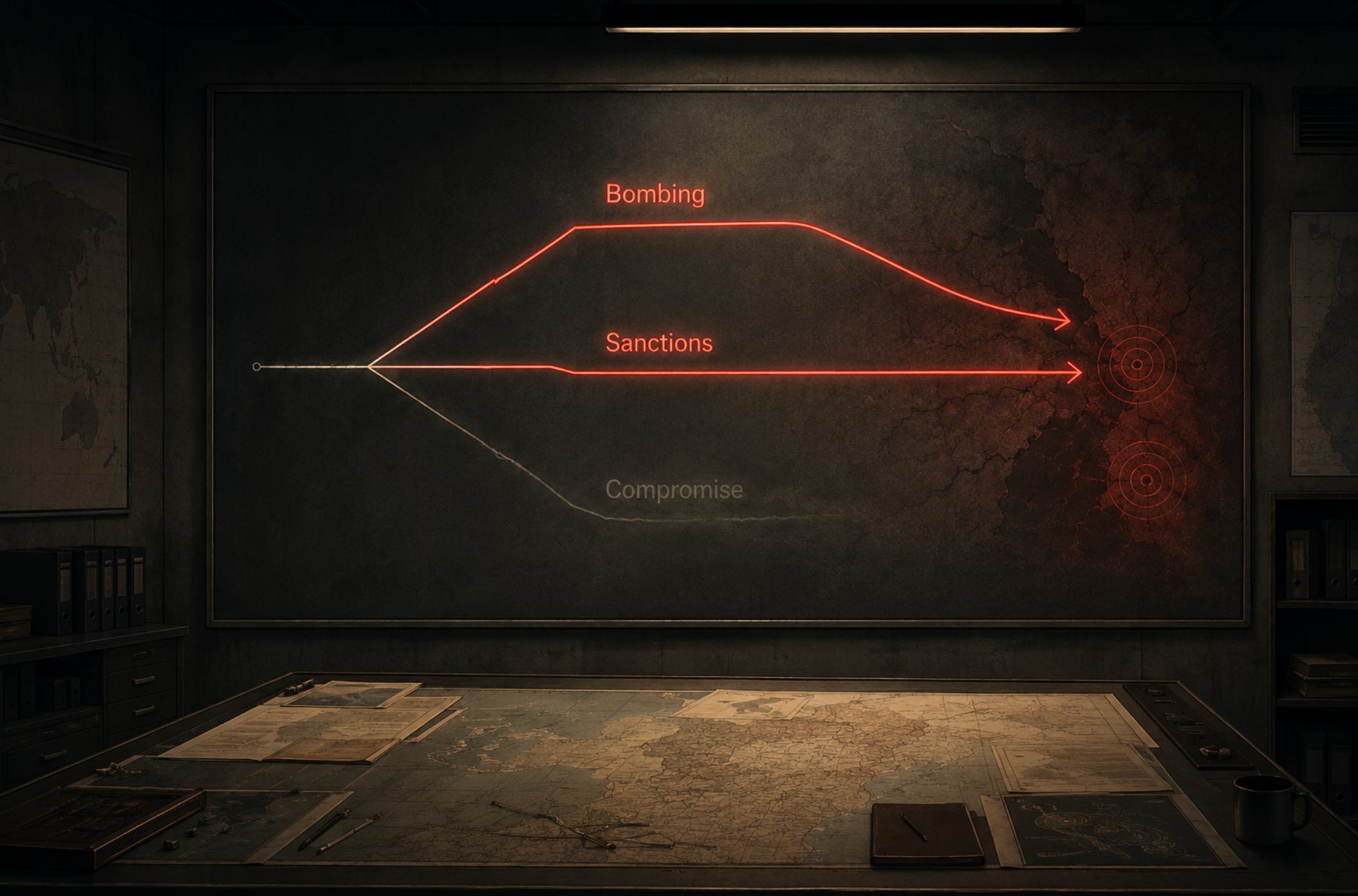
Trump's Three Cs fo Iran: Coerce, Continue, or Concede Failure?
A fourth "C" is missing: Compromise. Successful strategies usually include a negotiated endgame. Is a president who sees compromise as personal defeat psychologically capable of pursuing one?

Bombing and a Tentative Accord Didn’t Work. Does Trump Have a Plan C for Iran?
The administration appears to be reverting to an all-stick, no-carrot approach. But it has yet to answer why it believes economic warfare and bombing will yield a different result this time.
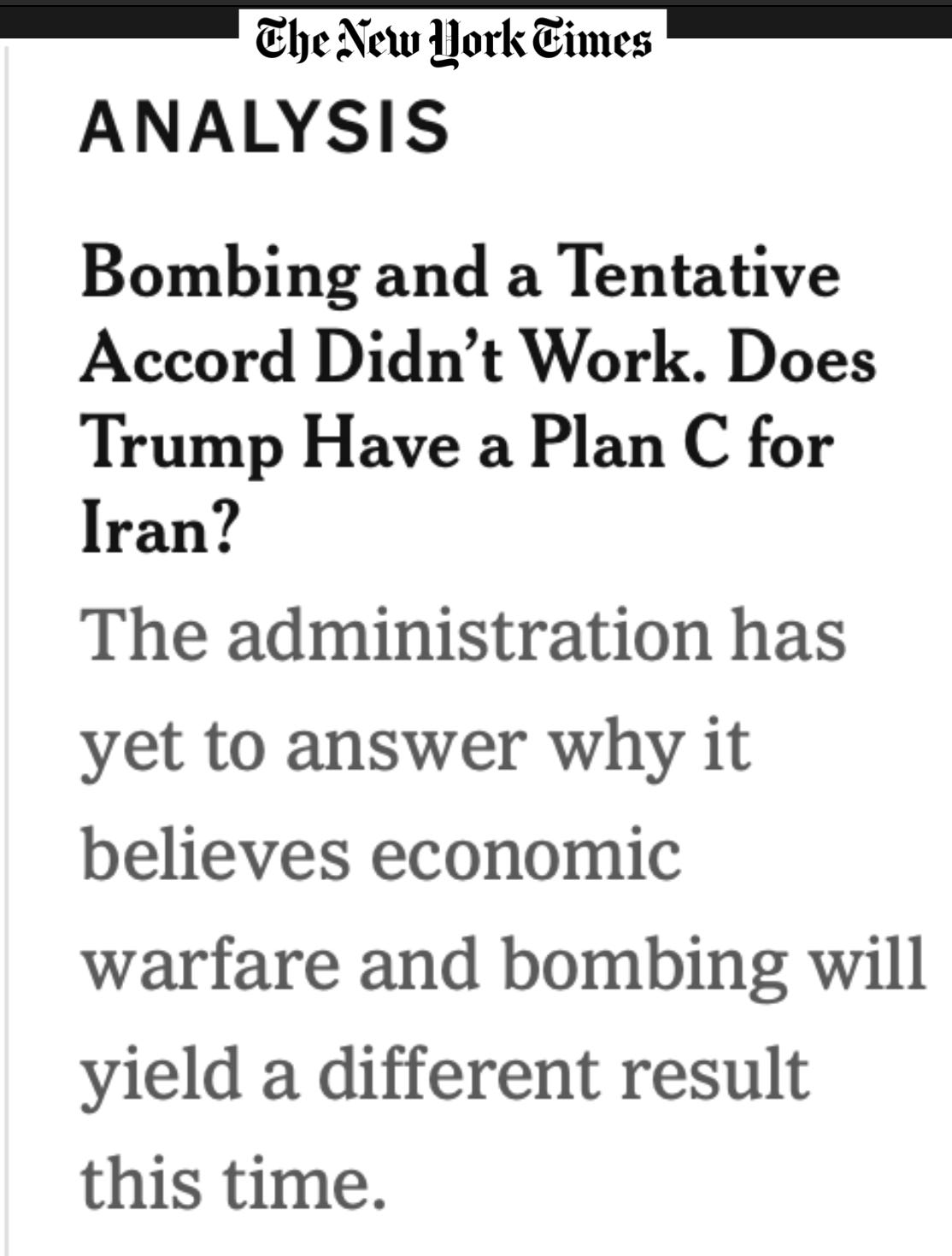
Here’s the link to the subscription article shown above.
Excerpt:
If Mr. Trump and his aides now have a Plan C — after bombing and a preliminary accord failed — they have not described it. Instead, it appears that they are returning to the oil sanctions and bombing runs that Mr. Trump describes as devastating, but that so far have only led to the current tangle.
“So, the deal is very simple,” Vice President JD Vance said on Wednesday. “If they shoot at ships, we’re going to knock the hell out of them,” added the vice president, who opposed the initial Feb. 28 attack but has since been tasked with defending the war and negotiating a way out of it.
In other words, carrots are out. Sticks are back. But the administration has yet to answer why it believes this combination of economic warfare and bombing will yield a different result this time.
The article raises a question that extends beyond diplomacy: Does the administration have a genuine Plan C if bombing and sanctions once again fail to produce the desired result?
Competent military planners almost never rely on a single course of action. They develop contingency plans—alternative branches to follow if events don’t unfold as expected. Military historians often quote the Prussian field marshal Helmuth von Moltke the Elder: “No plan survives first contact with the enemy.” Whether or not those were his exact words, they accurately capture his philosophy. The purpose of planning is not to predict every event but to prepare for the unexpected.
Modern militaries therefore don’t simply create “Plan A,” “Plan B,” and “Plan C.” They identify the enemy’s most likely course of action, the most dangerous course of action, multiple possible responses, and decision points at which commanders shift from one branch of the plan to another as events unfold.
The problem raised by the Times article isn’t whether military planners have alternative bombing options. They almost certainly do. The larger question is whether the administration has an alternative political strategy if renewed bombing and economic pressure once again fail to change Iran’s behavior.
History offers a cautionary example. Germany’s 1941 invasion of the Soviet Union assumed a rapid victory. When that assumption proved false, there was no realistic strategy for a prolonged war of attrition against a resilient Soviet military and industrial base. The campaign continued, but the original strategic assumptions had collapsed.
Wars are ultimately fought to achieve political objectives, not simply military victories. When the original strategy fails, successful governments don’t merely intensify the same tactics; they reassess whether those tactics can still achieve the political objective or whether a fundamentally different approach is required.
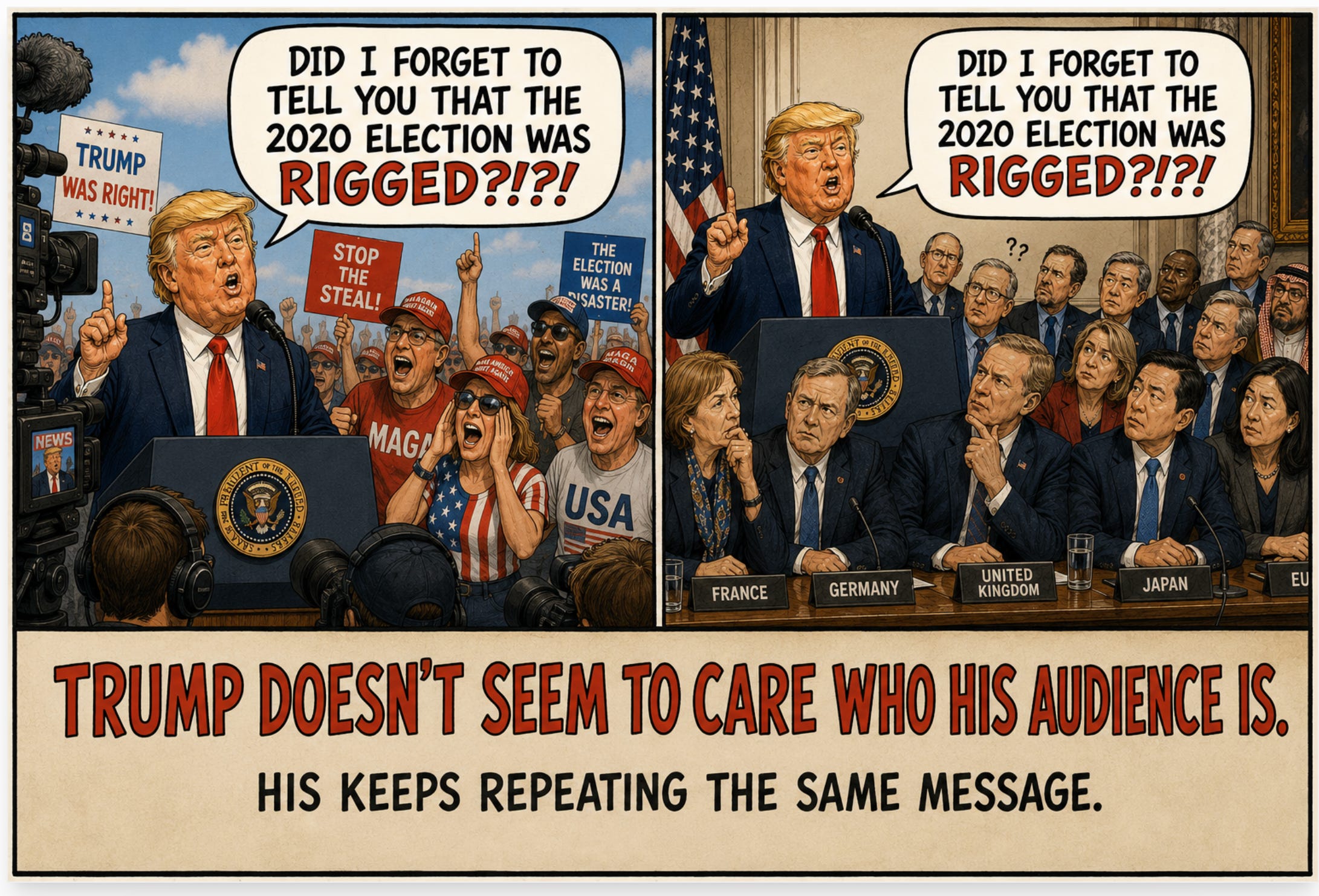
Few words seem to matter more to Donald Trump than "winner" and "loser." Being seen as a winner appears central to his public identity. Consider his continued insistence that he really won the 2020 election. Even when acknowledging that he is no longer president, he has repeatedly coupled that reality with claims that the election was stolen or marred by widespread fraud. He rarely, if ever, says simply, "I lost the election." His tendency to return to that claim even when discussing unrelated topics suggests how important that narrative is to him.
When it comes to the life and death decisions related to end the war in Iran this s what the progression is:
Trump’s self-image as experessed in what he say emphasizes winners and losers.
His conduct suggests avoiding the label “loser” is exceptionally important.
Negotiation often requires accepting less than total victory.
Therefore, the question becomes whether he can pursue that kind of negotiated outcome.
One hopes no American president would seriously contemplate nuclear weapons in such a conflict. But history shows that as conventional options narrow and leaders become increasingly invested in avoiding the appearance of failure, the pressure to escalate can grow. That is precisely why having a credible political endgame matters. If compromise is off the table, the danger is that Plan D is destruction—the kind of overwhelming devastation (another D) Trump himself has threatened to inflict on Iran.

Fervently, hope NOT plan C,; but agree with Jeffrey above as in crazy.
I'd pick the fifth C - Crazy. I honestly believe Don is unstable enough
to use nukes. Plus it would be the MAGA macho thing to do.